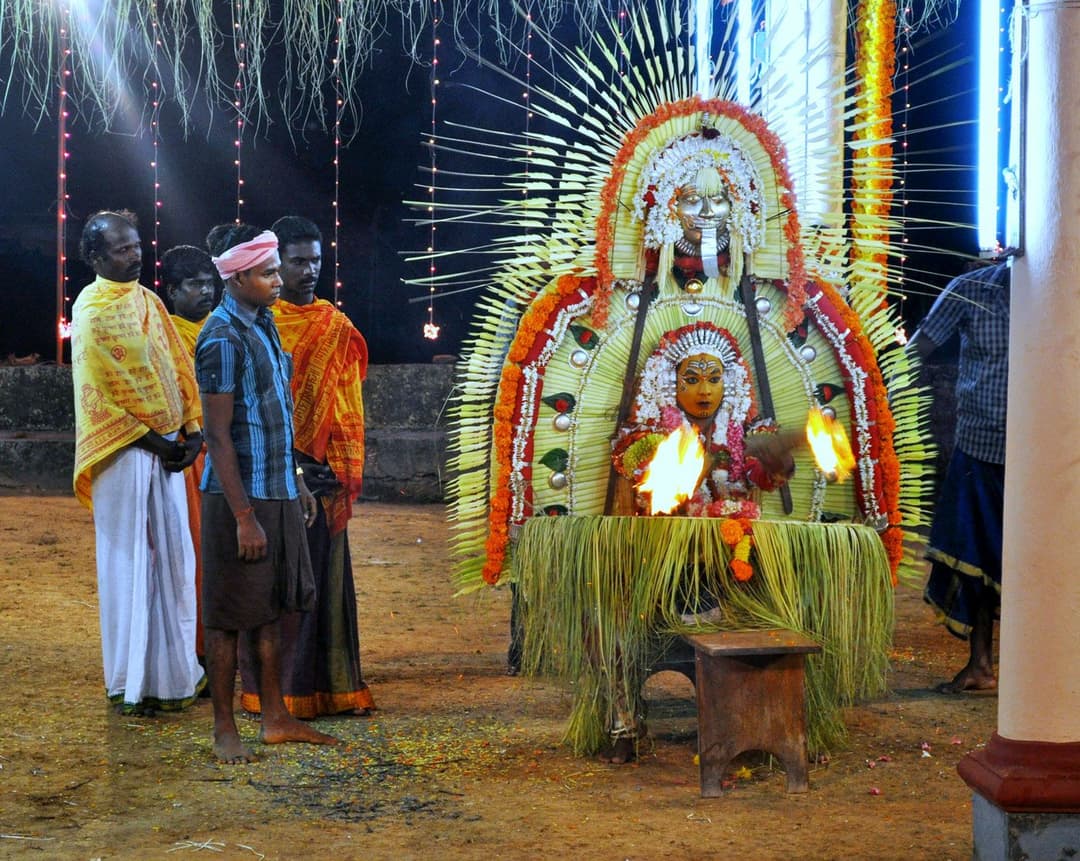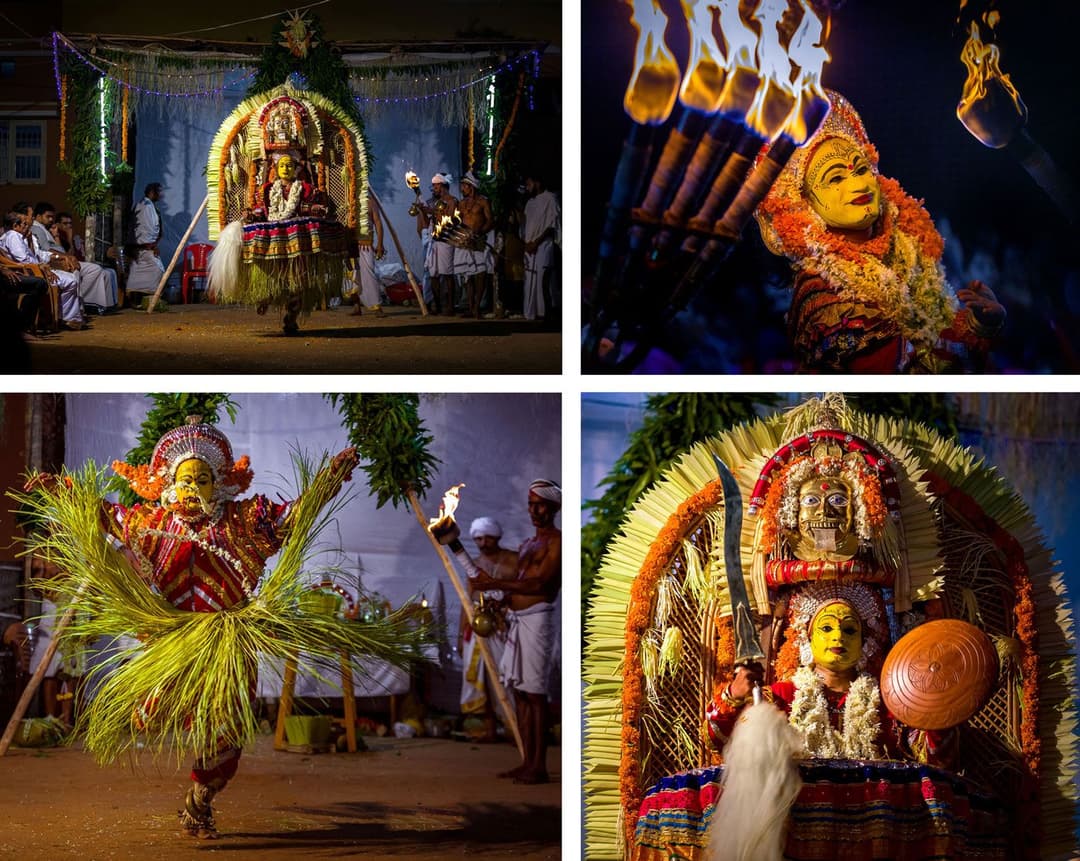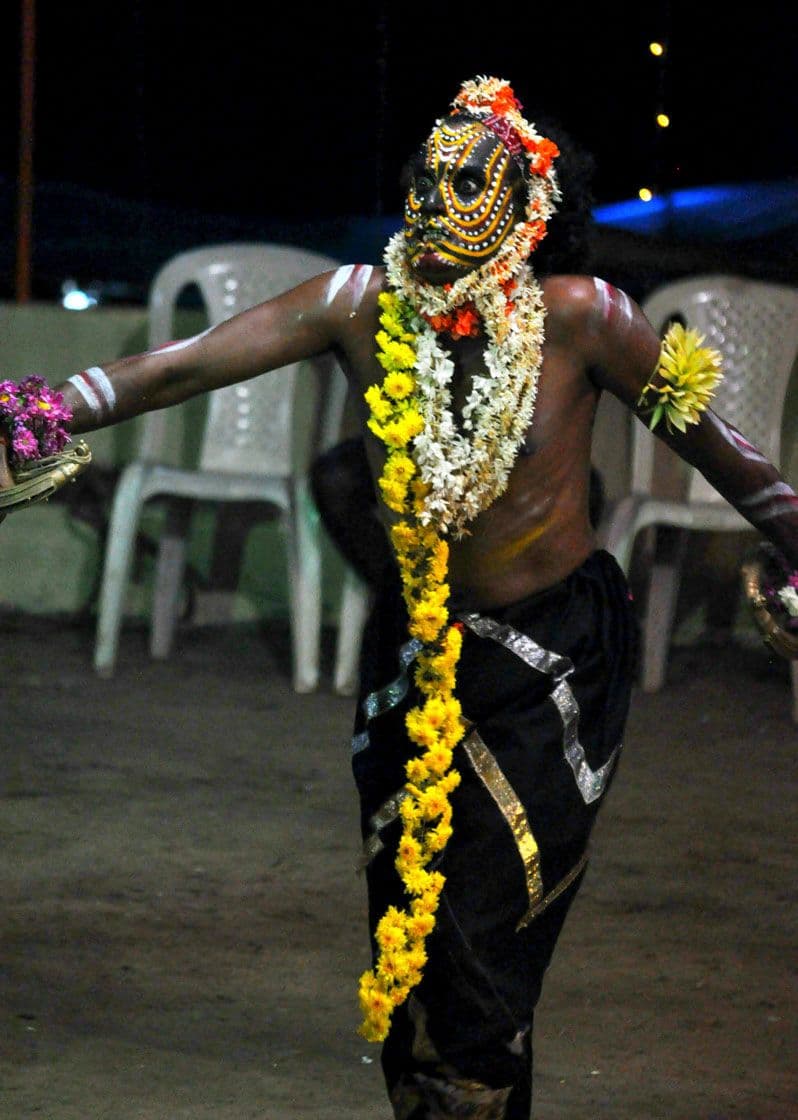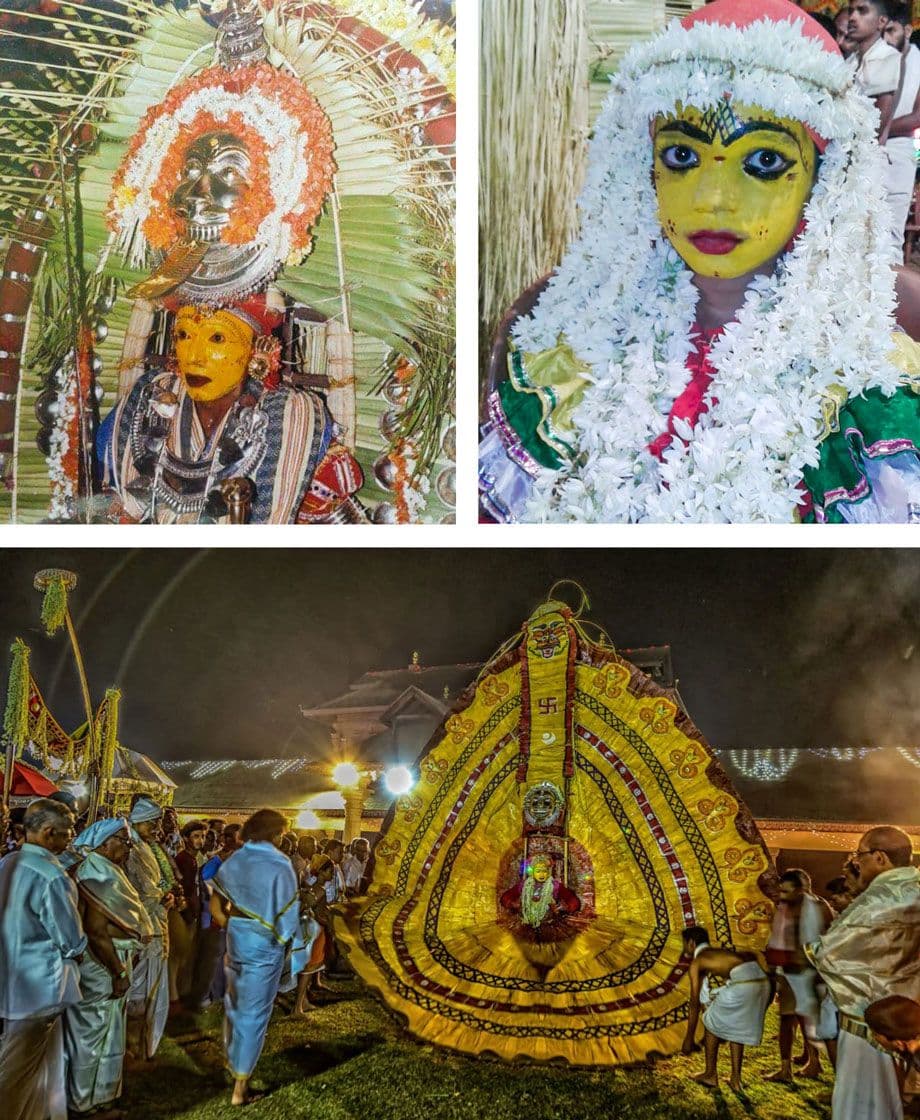

Everyone had gathered in the yard of a large house in Permude village to witness the metamorphosis of the dancer into Kordabbu Daiva. He was a sight to behold – in his elaborate costume, ornaments and bright yellow face paint.
The rituals began with the host, the owner of the house, ceremoniously offering oil to the impersonator for a ritualistic bath. The daiva applied make-up while a member of his family recited the paddanas, oral epics about the origins and prowess of the daiva – Kordabbu is a local cultural hero from a Dalit community. It was around 10:30 at night.
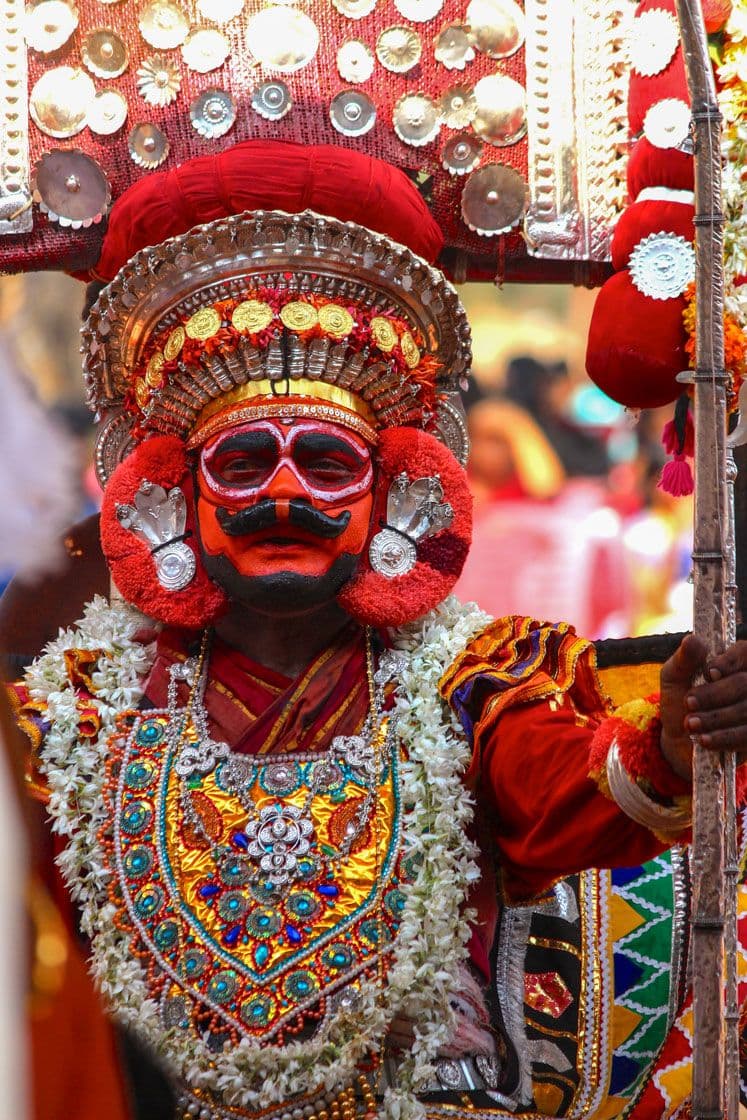
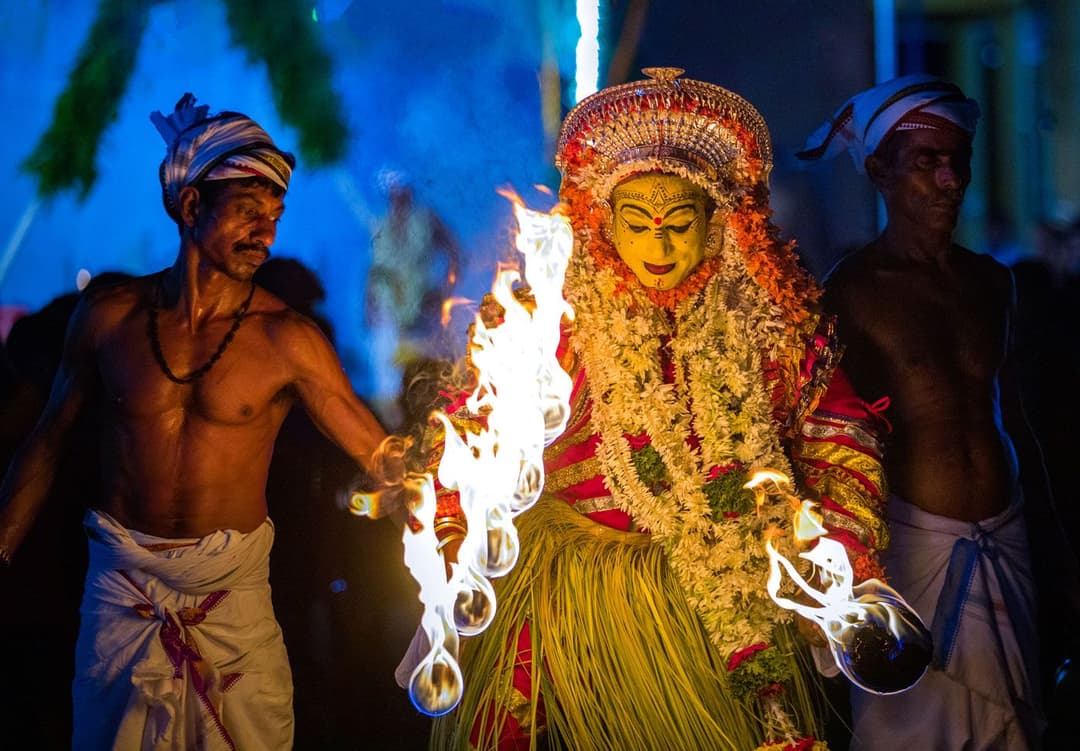
Once ready – with neckpiece, bangles, crown, a mask made of bronze and silver, an elaborate halo-headpiece made of wood, metal, tender coconut leaves, flowers, shells, bamboo and cloth, with fire torch in hand and bronze anklets on his feet – Kordabbu Daiva danced.
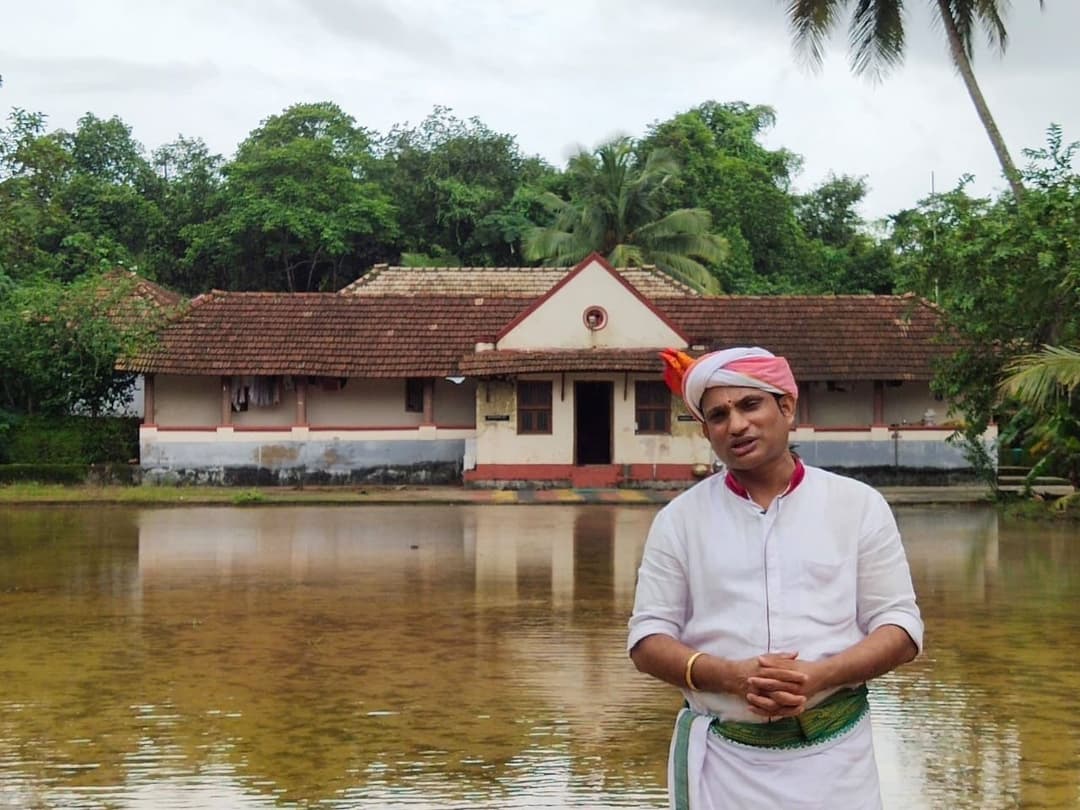
This was over a decade ago, in Mangalore taluk in Dakshina Kannada district, and I don’t recall the name of the performer. But Dayanand Kathalsar of Paduperar village in the same taluk, who is an impersonator-performer, recently told me, “If you believe in the daiva, it will deliver relief….”
That night, over a decade ago, the dancer jumped around, furiously, vigorously, to display his power. He asked the dani (host) why he had been called. A member of the impersonator’s family holds a fire torch and the daiva symbolically washes his hand in the fire. "Sometimes they walk on glowing coals or run through the fire or ‘swallow’ flames from camphor. All of this is done to create an atmosphere of fear and awe,” says Kathalsar.